
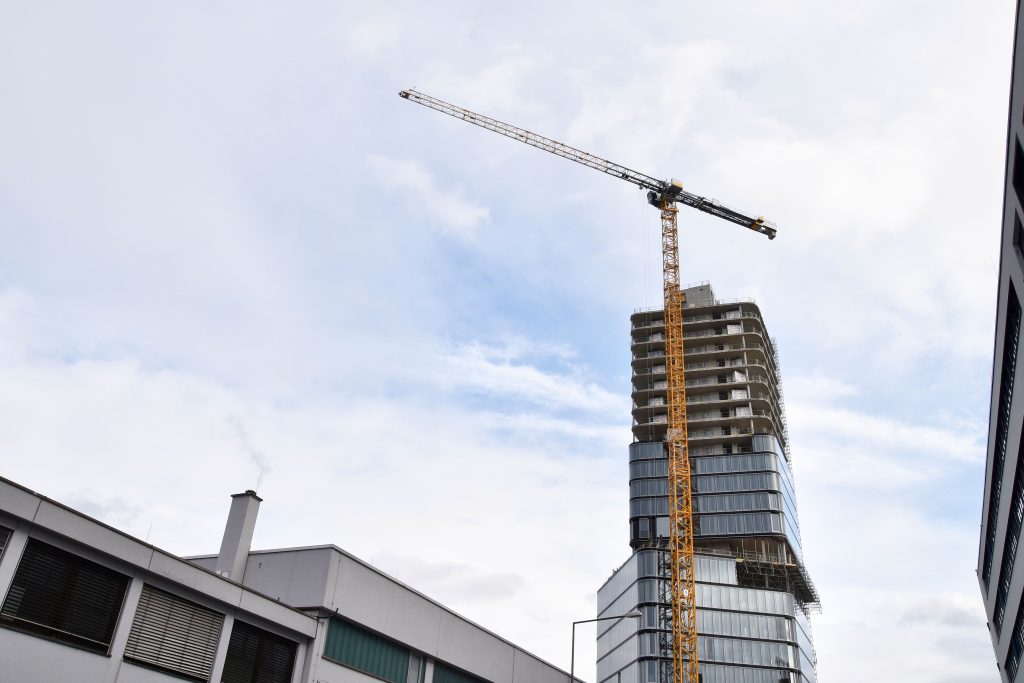
Long considered to be a conventional and weighty line of work, the construction business is witnessing a revolution in technology around the globe. From building design to material sourcing and even to the working population, everything is changing due to technological advances. For property owners and developers, this means work that is minimising time, cost, and improving quality from concept to inspection.
1. Building Information Modeling (BIM) and 3D Visualizations
The days of relying on 2D drawings for any planning of buildings are gone. Current-day contractors utilize advanced BIM software to make realistic 3D photographs, equipping them with structural, electrical and plumbing details. This software enables construction managers to carry out a “clash check” well ahead of time, before on-site inspections. Detecting a clash between a duct pipe and a steel beam in a BIM model saves companies thousands of dollars that would have been spent on on-site modifications and project delays.
2. Drones in Surveying and Inspection
Surveying large-scale construction sites used to be difficult and time-consuming. Commercial drones have simplified the process and allowed workers to carry out topographic surveys of large areas with nothing more than a few clicks of a button. Besides inspecting hard-to-reach areas such as rooftops for cracks, these machines can take high-resolution photos and videos that aid in relaying the visual progress of the work to stakeholders. Drones can even detect heat loss from buildings and identify structural problems and defects on high-rise buildings safely from afar.
3. Smart Heavy Equipment and Safety Wearables
The popularization of GPS-equipped bulldozers and excavators provides employees with a better opportunity to accomplish a project with increased accuracy. This is done while reducing the amount of physical labor and strain that was characteristic of construction sites in the past. Contractors are also capitalizing on the use of advanced worker safety equipment. Hard hats and biometric body sensors enable employers to monitor the health of their workers, while exoskeletons help in reducing the stress associated with manual labor.
4. Prefabrication and Modular Construction
Most of the prefabricated equipment and modular construction is carried out in a controlled factory environment. This means that the adverse weather conditions that plagued the construction industry in the past are a thing of the past. This technology also facilitates the use of advanced machinery that cuts down on waste materials during the cutting process. The entire framing process takes place in the factory, and workers can assemble the prefabricated components on-site, thus saving time while maintaining the quality of buildings.
5. Smart Green Material Technologies
The latest innovation trends are targeting the improvement of raw materials that were previously in use. Contractors are capitalizing on the use of self-healing concrete that eliminates the need for constant maintenance. Smart glass is also being utilized in construction sites since it can modify its level of transparency depending on the amount of sunlight it is exposed to. Other energy software can help in estimating the energy needs of a given building during the design process. This ensures that the recommended energy-efficient options such as insulation and solar panel adoption will help the owner cut down on their costs of operation in the long run.
6. Mobile Job Site Technologies
Construction job sites are being digitalized, and paperwork is being replaced by mobile applications. Project supervisors are being allowed to communicate, coordinate, update and inspect the worksites from their smartphones. The new generation of mobile applications enables the superintendents to capture and share site progress photos instantly, request for and approve change orders, and update suppliers on the much-needed materials. This eliminates the miscommunication and lack of transparency that were very common in the construction industry before the advent of these mobile applications. Everything from the job layout plans to the billing contracts is digitized and, as a result, more streamlined.
Conclusion
New technologies being adopted in the construction industry are aimed at supplementing and supporting the efforts of the construction workers. As the innovative trends continue to develop, it is only reasonable that projects take less time while also being safe and high-quality. The adoption of technology in construction has far-reaching benefits for all stakeholders and should be encouraged in the modern building industry.